
Table of Contents
ToggleDigital marketing strategies
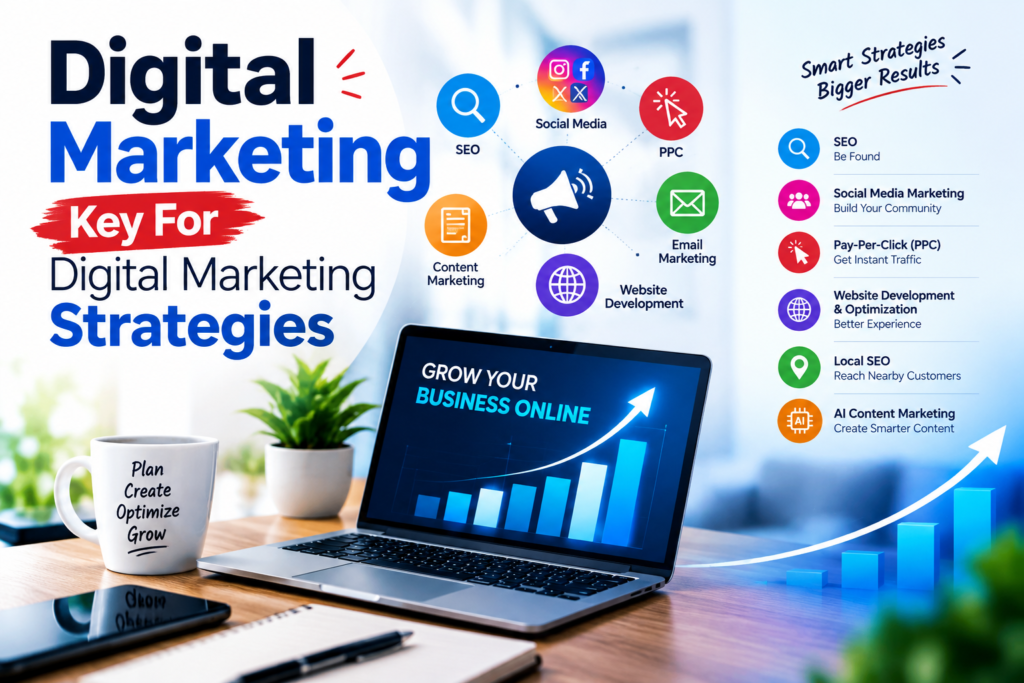
Help businesses reach the right audience, increase online visibility, and achieve measurable growth. By combining SEO, social media marketing, content marketing, email marketing, paid advertising, and website optimization, businesses can attract potential customers, build stronger relationships, and turn online engagement into valuable results.
Digital Marketing:
It also creates more opportunities to engage with customers, promote products or services, and encourage long-term business growth. Digital marketing helps businesses connect with these customers, build relationships, increase visibility, and turn online visitors into loyal customers.
Why Is Digital Marketing Important?
Customers now use search engines, social media, websites, and online reviews to discover and engage with businesses. Before making a purchase, customers often search online, compare different options, read reviews, and visit a company’s website or social media profiles. A well-planned digital marketing strategy helps a business appear at the right place and the right time. By using the right digital marketing strategies, businesses can attract relevant customers and create meaningful interactions throughout the customer journey.
Some major benefits include: –
This allows businesses to expand their audience and reach potential customers beyond their local market.
Targeted Marketing:
Reach audiences based on interests, location, demographics, and online behavior. Businesses can choose flexible Digital marketing strategies that help control marketing costs while reaching their target audience.
Measurable Results:
Track website visits, clicks, leads, conversions, and engagement.
Better Customer Engagement:
Interact directly with customers through social media, email, and other digital channels. Consistent online communication helps customers remember your brand and develop greater confidence in your business.
Major Areas of Digital Marketing
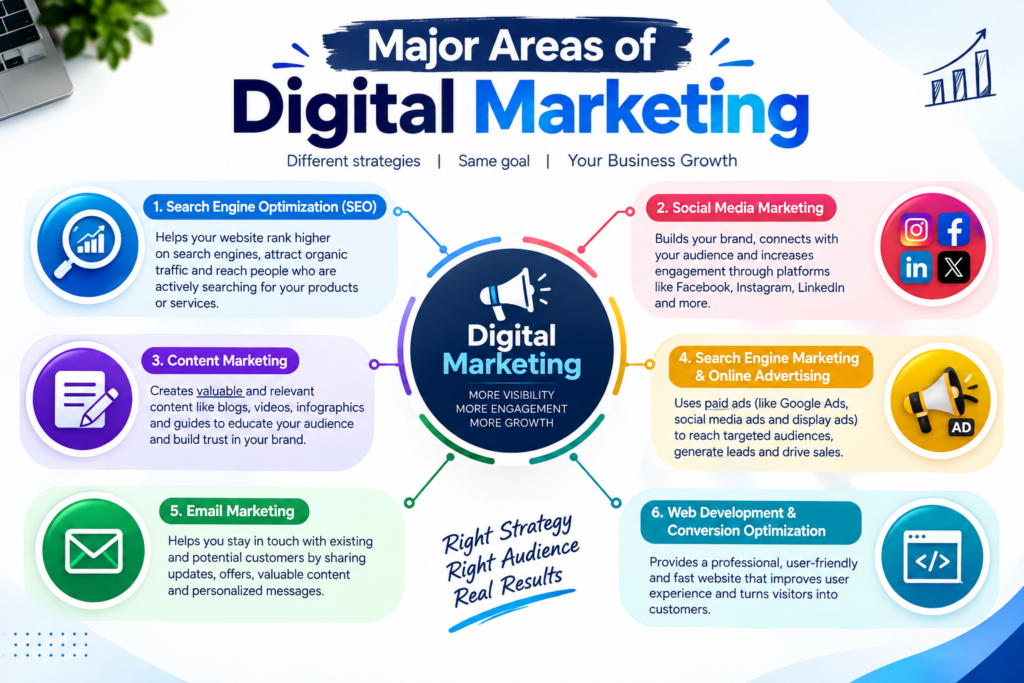
Each strategy can be tailored to a business’s goals, target audience, and available resources their marketing goals.
Each strategy focuses on a different part of the customer journey, and combining multiple approaches can create a stronger overall online presence.
1.Search Engine Optimization (SEO):
By using relevant keywords and creating useful content, businesses can attract more organic traffic and reach potential customers. By optimizing website content, keywords, technical elements, page speed, and user experience, businesses can increase their chances of appearing in relevant search results. SEO is one of the most important digital marketing strategies for attracting organic traffic. It can also improve a website’s search rankings, attract targeted visitors, and support long-term online visibility.
2. Social Media Marketing :
Social media marketing involves promoting a business through platforms such as Instagram, Facebook, LinkedIn, and YouTube. Regular social media activity can also help businesses build stronger relationships and encourage meaningful engagement with their audience. For small businesses, social media marketing can be an important part of their digital marketing strategies, helping them build an audience and maintain regular communication with potential customers.
It can include blog posts, videos, guides, infographics, and other content that helps attract and educate potential customers. Blog posts, videos, infographics, guides, case studies, and social media content are common examples. A well-planned content marketing strategy can support SEO, social media, and other digital marketing strategies by providing customers with useful information while helping businesses demonstrate their knowledge and expertise.
It can be used to share updates, promote offers, nurture leads, and maintain long-term customer relationships. Businesses can use email campaigns to share updates, offers, newsletters, educational content, product information, and personalized messages. Effective email marketing strategies can help businesses maintain customer relationships, encourage repeat engagement, and keep their brand connected with existing customers.
3. Pay-Per-Click (PPC) Advertising
PPC advertising allows businesses to display paid advertisements on search engines, social media platforms, and other websites. It allows businesses to control their advertising budget while measuring clicks, conversions, and campaign performance. With proper Digital marketing strategies campaign planning, keyword selection, audience targeting, and performance tracking, PPC can generate website traffic, leads, sales, or other desired actions.
4. Website Development and Optimization
A website is often one of the most important parts of a business’s online presence. A professional, mobile-friendly, fast, and easy-to-navigate website can provide visitors with a better experience. Website optimization should be an important part of your overall digital marketing strategies because visitors need a clear and convenient way to learn about your business, contact you, request a service, or make a purchase.
5. Local SEO
Local SEO helps businesses improve their visibility in searches related to a specific geographic area. It is particularly useful for businesses that serve customers in a particular city, town, or region. It can also improve a business’s visibility in local search results and help drive more visits, calls, and inquiries, it also helps digital marketing strategies.
6. AI Content Marketing
Artificial intelligence is becoming an increasingly useful tool in digital marketing. AI can help marketers research topics, generate content ideas, analyze information, personalize marketing messages, and improve workflows. When used properly, AI can support modern digital marketing strategies while helping marketers save time and create more personalized content. However, businesses should combine AI tools with human creativity, expertise, fact-checking, and brand understanding to create useful and trustworthy content.
The Role of Data in Digital Marketing
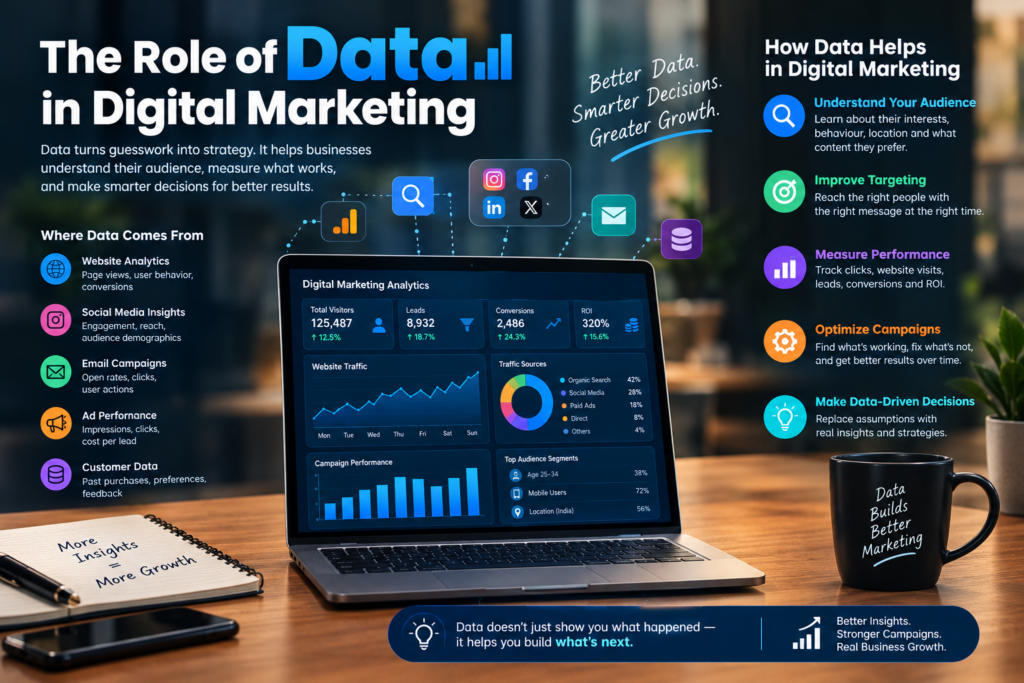
Analyzing this data allows businesses to make informed decisions, improve their strategies, and achieve better marketing results. Instead of relying entirely on assumptions, businesses can use data to make smarter decisions, optimize campaigns, and improve their return on investment. AI-powered tools can help businesses analyze customer behavior, create content, personalize campaigns, and automate repetitive marketing tasks. AI-powered tools can assist marketers with content creation, customer insights, personalization, automation, research, data analysis, and campaign optimization. When used effectively, AI can save time, improve efficiency, and help marketers make more informed decisions. Understanding the audience, creating authentic communication, developing a strong brand identity, and providing valuable content remain important parts of successful digital marketing strategies.
Developing Effective Digital Marketing Strategies
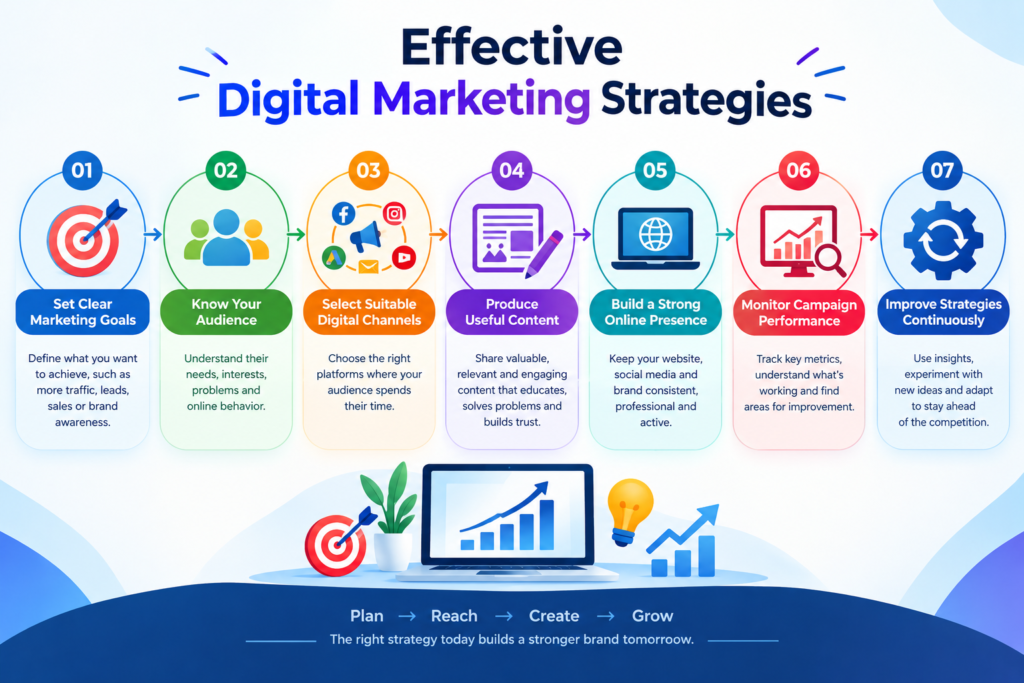
A successful digital marketing campaign begins with a well-planned approach. Before choosing promotional methods, businesses need to understand who they want to reach, what they want to accomplish, and how they will track their progress. A clear strategy makes it easier to select suitable marketing platforms, create useful content, and connect with potential customers.
1. Set Clear Marketing Goals
The first step is to decide what the business wants to achieve through digital marketing. Goals may include attracting more visitors to a website, generating new leads, increasing sales, strengthening brand recognition, or gaining new customers. Setting specific and measurable objectives provides a clear direction and makes it easier to evaluate campaign performance.
2. Know Your Audience
Understanding potential customers is essential for creating effective Digital marketing strategies campaigns. Businesses should learn about their audience’s interests, needs, problems, online activities, preferences, and buying behavior. This information helps marketers develop messages and content that are more relevant to the people they want to reach.
3. Select Suitable Digital Channels
Different businesses may require different marketing platforms. Instead of trying to maintain a presence on every channel, businesses should focus on the platforms where their target customers are most active. Depending on their goals, they may use search engine optimization, social media, email campaigns, content marketing, or paid advertising. Selecting suitable channels can help businesses make better use of their available time and budget.
4. Produce Useful Content
Quality content is an important part of digital marketing. Businesses should create material that answers customer questions, solves problems, provides useful information, or offers meaningful insights. Blog articles, videos, social media updates, email newsletters, guides, and infographics are some examples of content businesses can use.
Rather than focusing only on direct promotion, businesses should aim to provide genuine value to their audience. Helpful content can strengthen credibility, encourage engagement, increase online visibility, and guide potential customers toward taking the next step, it could be more useful for Digital marketing strategies.
5. Build a Strong Online Presence
A professional website and consistent digital profiles can help establish a recognizable presence online. Businesses should make sure their websites are easy to navigate, mobile-friendly, informative, and aligned with their brand. Maintaining accurate and consistent information across digital platforms can also make it easier for customers to find and trust the business.
6. Monitor Campaign Performance
Digital marketing strategies provides businesses with access to useful performance data. Marketers can track website visits, engagement, leads, conversions, advertising results, email performance, and other relevant metrics. Reviewing this information regularly helps identify which activities are producing results and which areas may need improvement.
7. Improve Strategies Continuously
Digital marketing is not a one-time activity. Customer preferences, online platforms, search behavior, and market conditions can change over time. Businesses should regularly review their campaigns and make adjustments based on performance data and customer feedback. Continuous improvement can help Digital marketing strategies efforts remain relevant and effective.
Basic Digital Marketing Strategy
A simple digital marketing plan can include:
- Identify the ideal target audience
- Establish measurable business objectives
- Create a professional online presence
- Develop useful and relevant content
- Select appropriate marketing channels
- Monitor campaign performance
- Analyze data and make improvements
- Continue testing and refining strategies
Using a structured approach allows businesses to make their digital marketing strategies efforts more organized and purposeful. By combining audience research, valuable content, suitable channels, performance tracking, and ongoing optimization, businesses can create campaigns that support their broader marketing and business objectives. There is no universal digital marketing formula that delivers the same results for every business. Marketing requirements can vary depending on the type of business, customer profile, available budget, level of competition, internal resources, and specific goals. For this reason, businesses should experiment with different marketing methods, review the results they generate, and make changes when necessary. A flexible approach allows businesses to identify what works best for their particular audience and objectives.
The Future of Digital Marketing
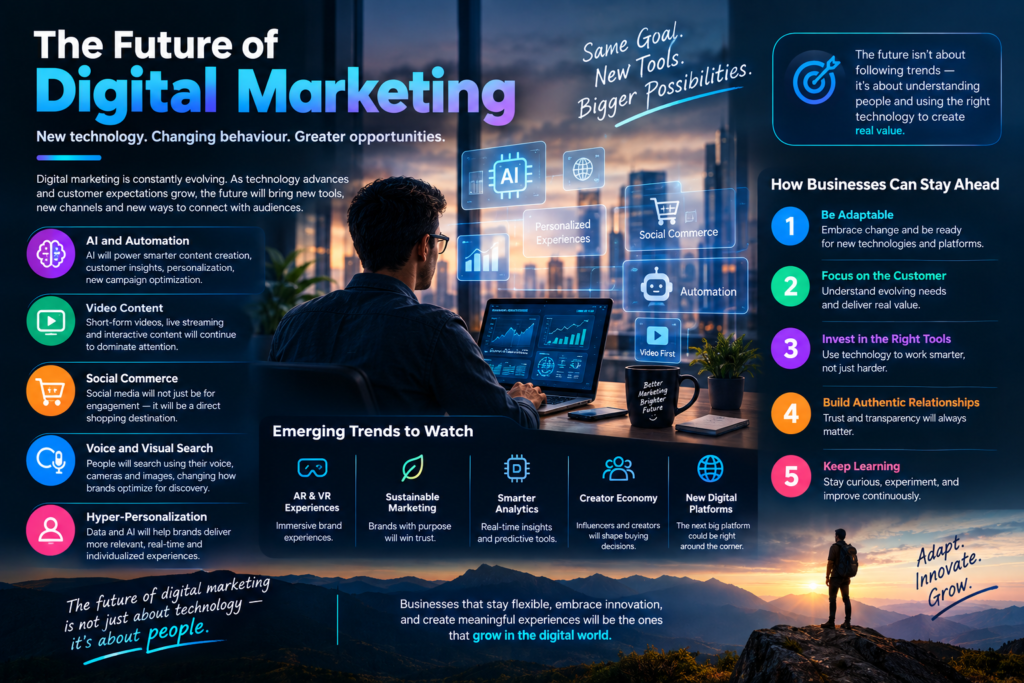
Digital marketing is expected to keep changing as technology develops and customer expectations evolve. Artificial intelligence, automation, personalized experiences, video, social commerce, and emerging online platforms are likely to influence how brands communicate with their audiences. As customers adopt new ways of searching for information and interacting with businesses, marketers will need to adjust their strategies accordingly.
Artificial intelligence is already becoming a useful part of many marketing activities. AI-based tools can assist with analyzing large amounts of data, generating content ideas, identifying customer patterns, and automating repetitive tasks. These technologies can improve efficiency and help marketers make better use of available information.
However, technology alone cannot replace the importance of human involvement in Digital marketing strategies. Creativity, originality, strategic planning, empathy, and a genuine understanding of customers continue to play an important role. Businesses need to combine technological tools with meaningful communication to create experiences that customers value.
The digital environment will continue to develop, bringing both new opportunities and new challenges. Businesses should therefore keep track of changing customer preferences, evaluate emerging technologies, and regularly review their marketing activities. Instead of adopting every new trend, businesses should focus on using technologies and platforms that are relevant to their customers and business objectives.
Companies that remain flexible and continuously improve their digital marketing strategies efforts can respond more effectively to changing market conditions. By focusing on customer needs and delivering useful experiences, businesses can strengthen their online presence and create opportunities for long-term development.
Conclusion
Digital marketing has become an important part of how modern businesses attract and communicate with customers. Digital marketing strategies such as SEO, social media marketing, content creation, email marketing, paid advertising, and website optimization can work together to create a stronger online presence.
A well-planned digital marketing approach can help businesses through Digital marketing strategies reach relevant audiences, improve their visibility, generate potential leads, encourage customer engagement, and develop lasting relationships. However, the right approach will differ from one business to another. Industry, audience, goals, competition, budget, and available resources all influence which marketing methods are appropriate.
Small businesses, startups, freelancers, and established companies can all use digital marketing to support their online objectives. By choosing suitable channels, creating valuable content, understanding customer needs, and monitoring campaign performance, businesses can make their marketing activities more focused and measurable.
The online marketplace will continue to change as new technologies and customer behaviors emerge. Businesses that remain open to change, use technology thoughtfully, understand their audiences, and consistently provide useful value can develop a more resilient digital presence. Regularly reviewing and improving marketing strategies can also help businesses respond to new opportunities and maintain meaningful connections with their customers.
Author : Sabin sasi